The first thing I do when I arrive at a lot of food and product shoots is start turning lights off. Not on. Off. (If you’ve worked with me before and found a few of your bulbs unscrewed after I left, I can only apologise.)
Sounds backwards, I know. More light should mean better photos, right? The thing is, most of the lights you’ll find in a restaurant, bar, hotel room or office are there for the people in the space. They make the room feel nice. They aren’t designed to make food look appetising or a product look its best in a photograph. There’s a gap between those two purposes, and it’s a much bigger gap than people realise.
The UK Light Problem
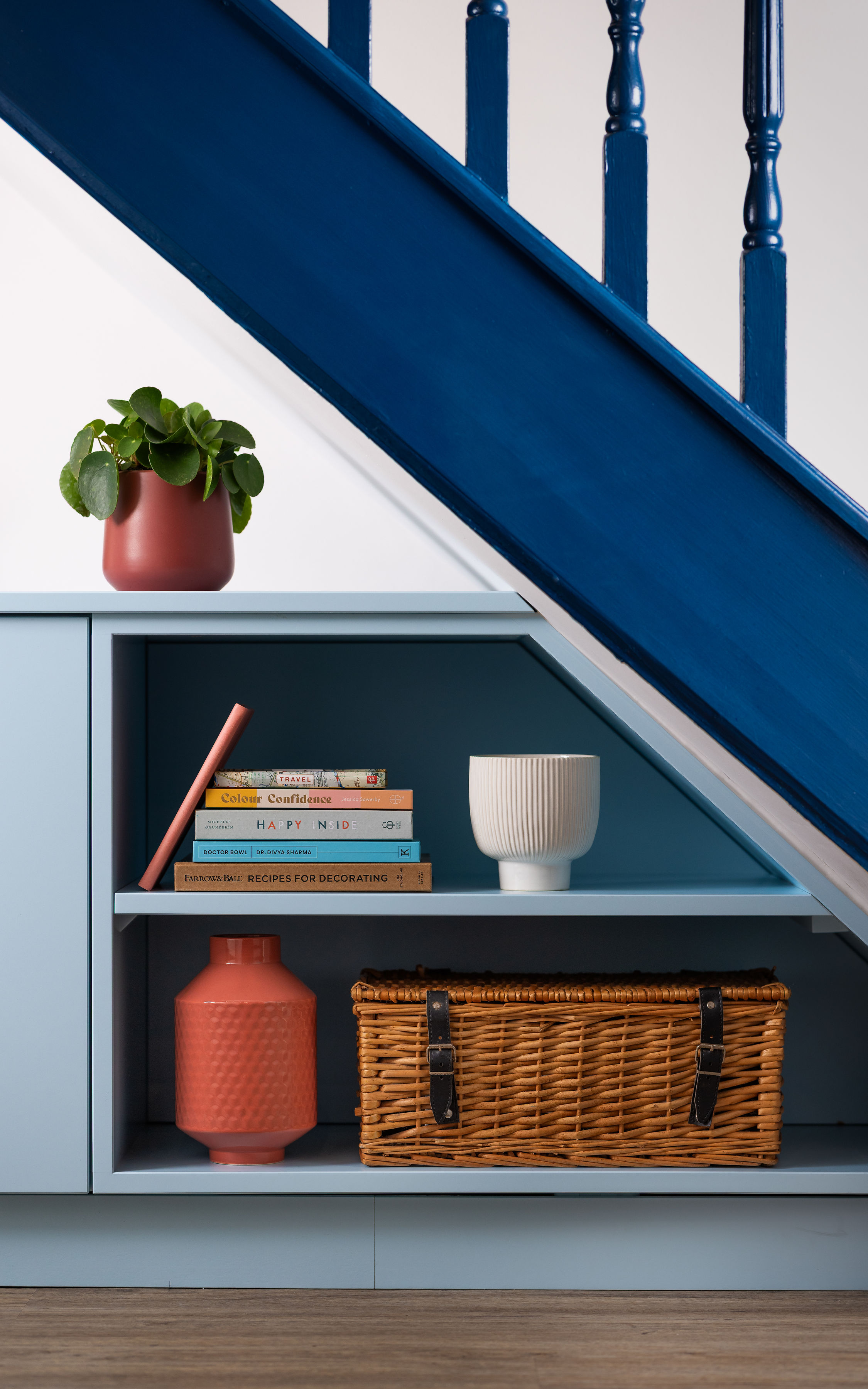
This room had very little natural light. Relying on what was already there would have given awkward shadows and rough colour rendering, so I used a large lantern softbox to push soft, accurate light into the space.
If you’re a photographer working in somewhere like California or the south of France, you can probably get away with relying on natural light for most of your work. Big windows, consistent sunshine, predictable conditions. In the UK, that’s a fantasy. I’ve had shoots where the light has changed dramatically three or four times in a single hour. Bright sun, then overcast, then a heavy cloud rolls in and the room goes flat, then the sun comes back and blows out one side of the frame. You can’t build a consistent set of images for a client when the light source keeps changing on you.
Even on a good day, natural light in the UK has limitations. A lot of venues face the wrong direction for useful window light. Some have small windows, deep rooms, or overhangs that block what little light there is.
I’ve shot in restaurants where the nearest window was 15 metres away and the only light reaching the table was from the ceiling spots. That’s not a situation where you can just “make do” with what’s available.
And then there’s the colour problem, which is the one that catches most people off guard.
Why Mixed Light Is the Real Enemy
This is something I notice constantly in other people’s food and venue photography, and it’s one of those things where once you see it, you can’t unsee it. Most indoor spaces have a mix of light sources. You might have warm tungsten bulbs overhead, cooler daylight coming through a window, maybe some LED strip lighting behind a bar that’s a slightly different colour again. To your eyes, your brain adjusts and it all looks fine. To a camera, it’s chaos.
You end up with one side of the plate looking warm and orange, and the other side looking cool and blue. Or the food itself looks one colour but the table and background look completely different. You can try to correct this in editing, but when there are multiple different colour temperatures in the same frame, you’re choosing which one to fix. You can’t fix them all. Making the food look accurate might mean the background goes orange. Making the background neutral might mean the food looks cold and unappetising.
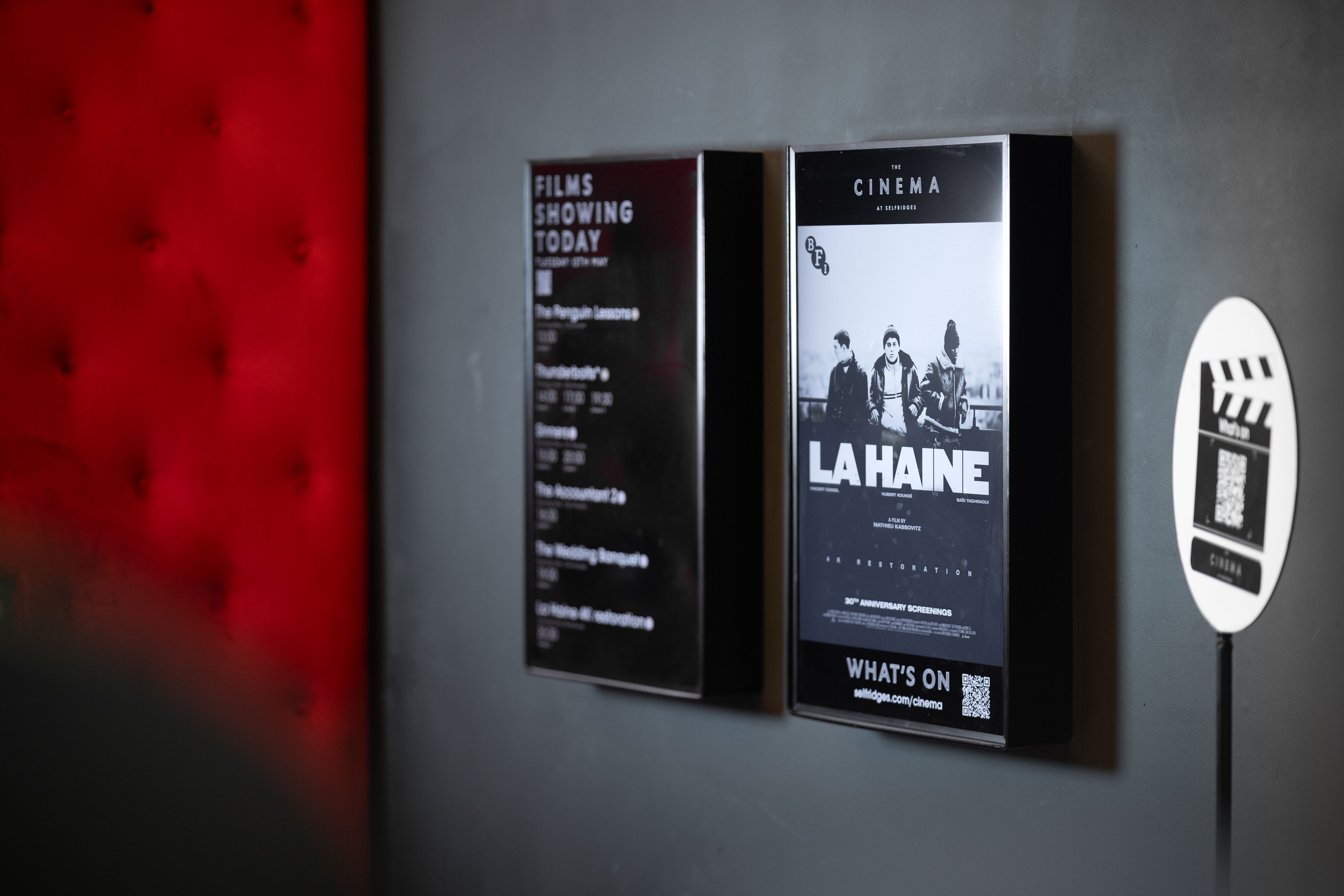
The absolute worst example is somewhere with hanging tungsten Edison bulbs. Those run at around 2,500 Kelvin, which is extremely warm and orange. Daylight coming through a window is closer to 5,500 Kelvin, which is much cooler and bluer. Having both of those in the same frame is a nightmare. The spots create hard, warm pools of light from above (which also creates harsh shadows and specular highlights on anything reflective, like plates, glasses, cutlery, glossy sauces). The window provides softer, cooler light from the side. These two sources are fighting each other, and no amount of editing will fully reconcile them in the final image.
This is exactly why I turn off the ceiling lights. Take one of the competing sources out of the equation and the whole thing gets a lot easier to deal with.
What I Actually Bring
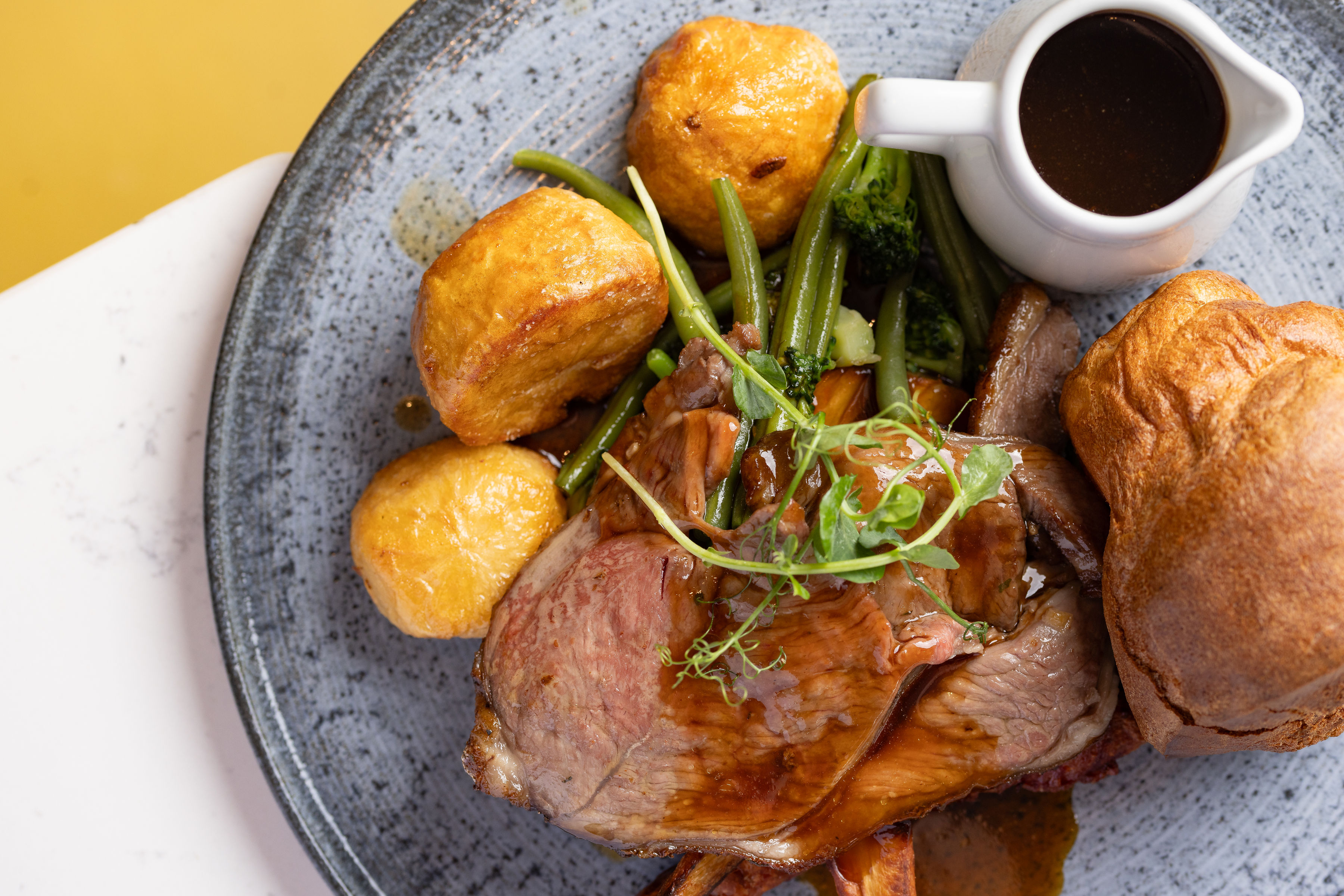
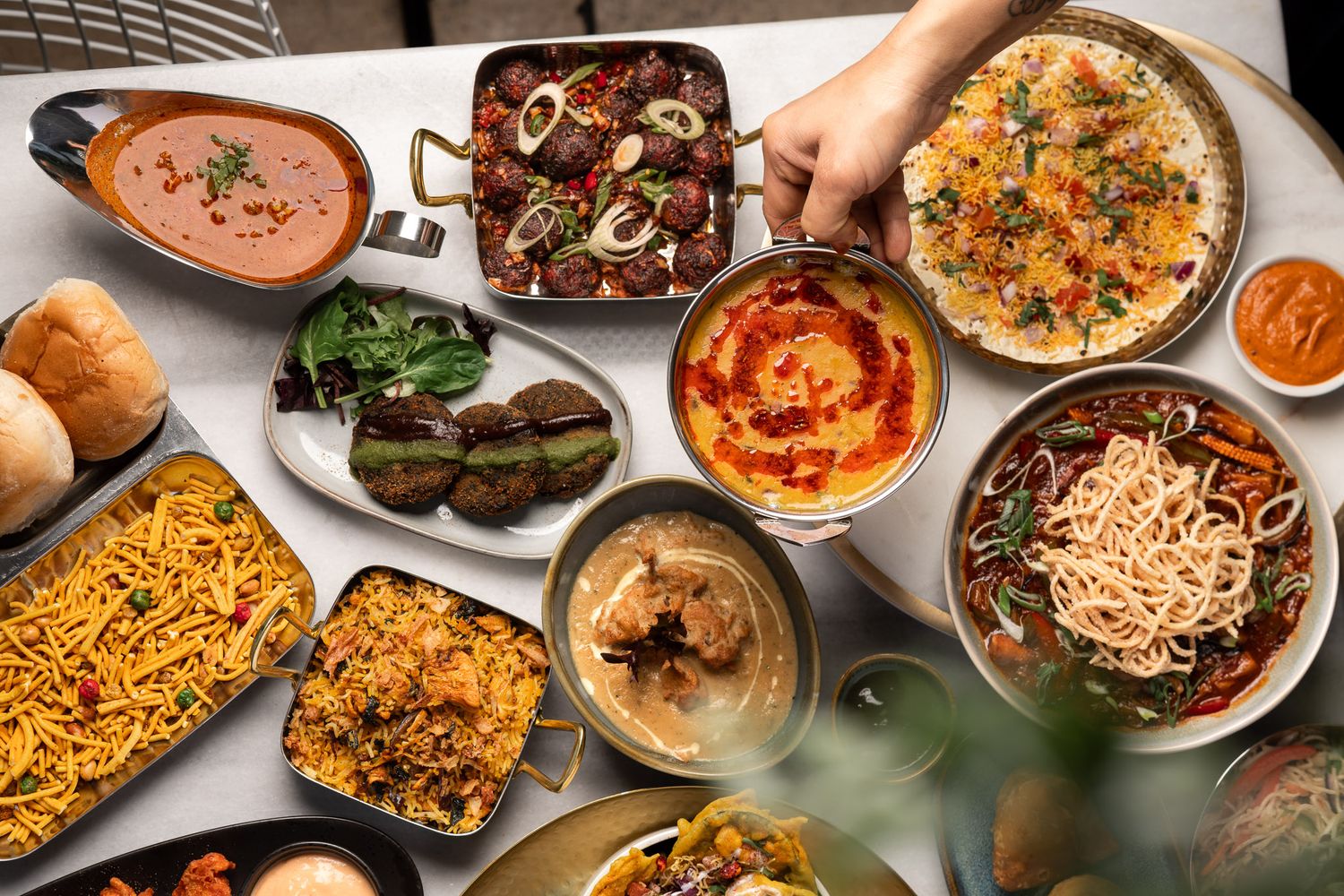
Same trick, food version: a large softbox standing in for a generous window. Big light source, no harsh specular highlights bouncing off the plate or sauces.
My setup varies depending on the type of shoot, but the idea is always the same. I want a light source I can control completely. Direction, intensity, colour temperature, how soft or hard it falls on the subject. Once I have that control, the result doesn’t depend on what’s already going on in the room.
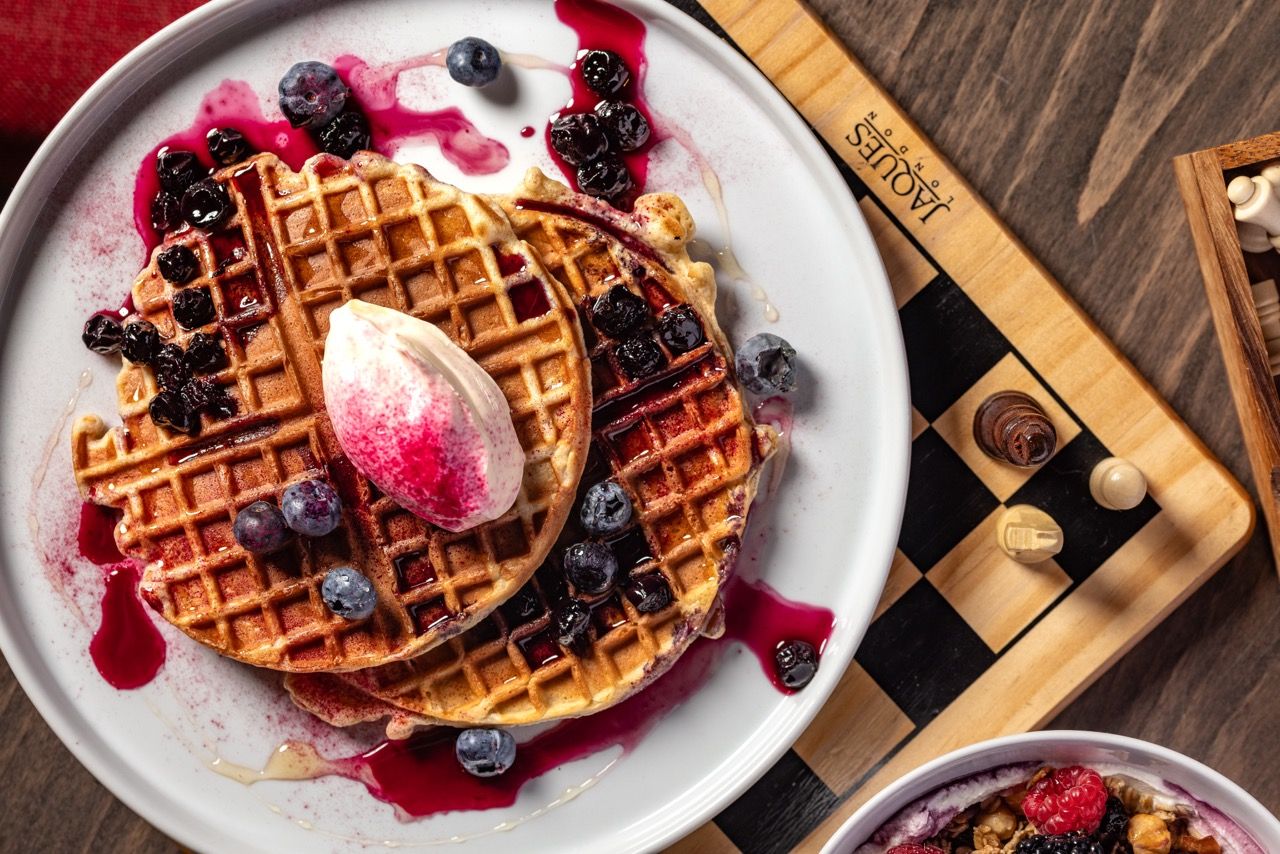
For food photography, I’m usually working with flash units and softboxes. The goal is to emulate what a really nice window would provide. Soft, directional light that wraps around the dish, with shadows that feel natural and colours that sit true to life.
Getting this right can take a good 20 minutes at the start of a shoot, testing positions, adjusting the height, the angle, how much diffusion I’m using. Once it’s dialled in though, I can move through dish after dish quickly, because the light isn’t going anywhere.
A lot of people who look at my portfolio assume I’m shooting with natural light. That’s actually the goal. Everything I’m doing with artificial lighting is to make it feel natural, just without needing the natural light to actually be there. It means I’m not at the mercy of the weather or the time of day.
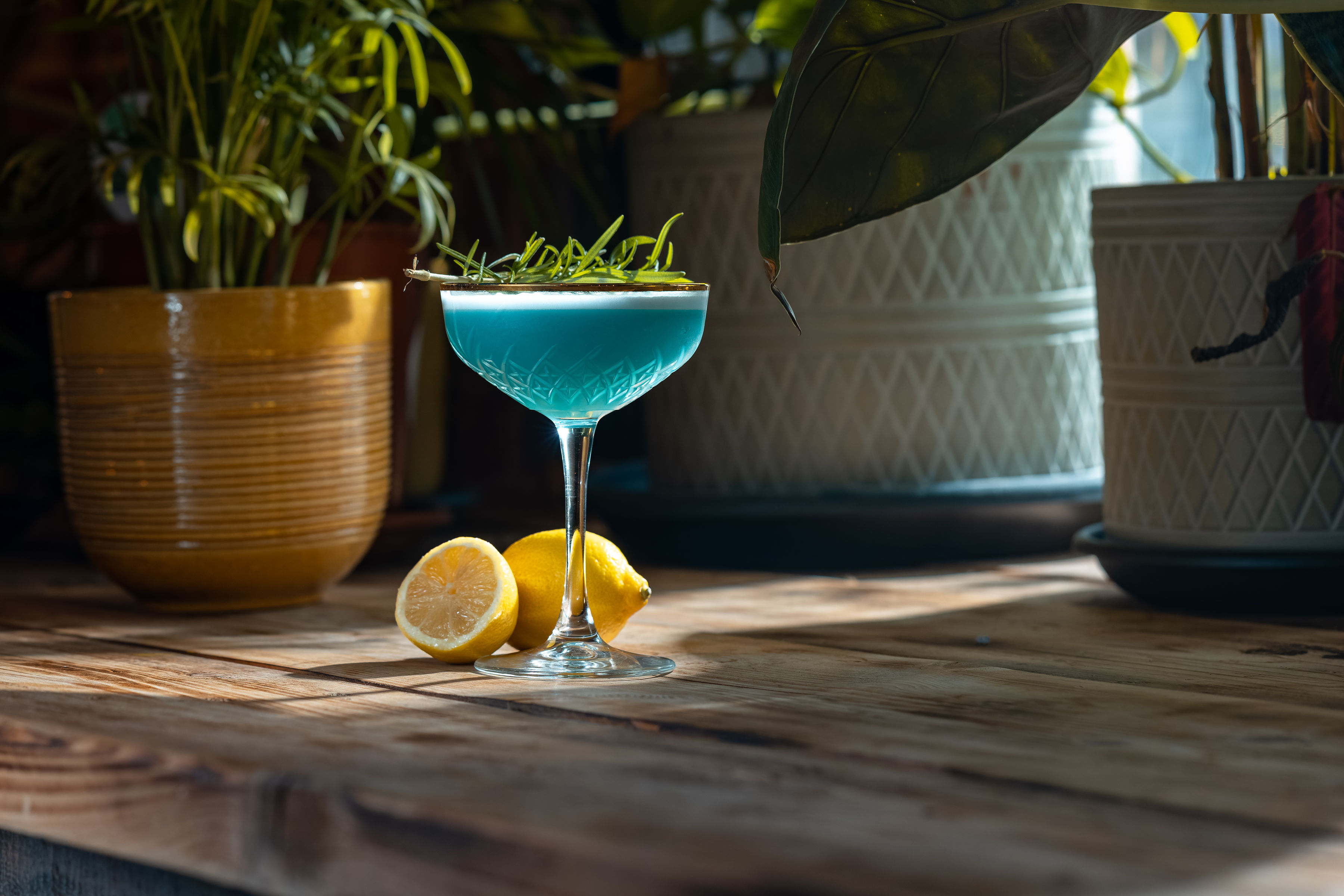
The header image on this article is a decent example. That cocktail looks like it’s catching gentle sunlight pouring through the window behind it. It isn’t. There was a bare-bulb flash placed outside the window, firing back through the glass, mimicking what the sun would have done if it had bothered to turn up that day.
Try getting to the bar at the back of a dark room where they’ve got hanging tungsten bulbs and nothing else, and they want a high-end shot of some cocktail making. You’re not getting their products looking accurate under that light. You can sometimes pull off a lifestyle shot, but anything where the colour of the product matters (and it always matters) is just not happening without bringing your own light.
Sometimes the brief calls for something moodier. Dark backgrounds, dramatic shadows, that kind of look. That’s still artificial light, just used differently. Pulled further to the side, less diffusion, maybe a smaller light source to create sharper shadows. Same kit, different positioning. Either way the mood is something I’m choosing, not something I’m waiting for the room to hand me.
For interiors and property work, it’s a different approach. I might use constant lights or multiple flash positions to balance a room, making sure the inside of the space is properly lit without the windows blowing out to white. For portraits and headshots, I’ll typically use a larger softbox or octabox to get that flattering, even light on someone’s face. Video work uses constant lights rather than flash, since you need the light to be there continuously rather than firing in a fraction of a second.
And for the record, I’m not anti-natural-light. For a networking event, candid lifestyle work, anything where the brief is to capture what’s actually happening as it happens, I’ll just work with the light that’s there and make the most of it. Bringing in a softbox to a busy room would defeat the point. The big lighting setup is mostly for food, products, interiors, and anything where the colour and quality of the image really has to be right.
Even then, I’m not turning everything off. A hotel shoot wants the bedside lamps and wall lights on. They give the room warmth and character. The same goes for restaurants where the ambient lighting is part of what makes the place feel like itself. It’s the harsh overhead spots that tend to come off, not every bulb in the building.
The Specular Highlight Problem
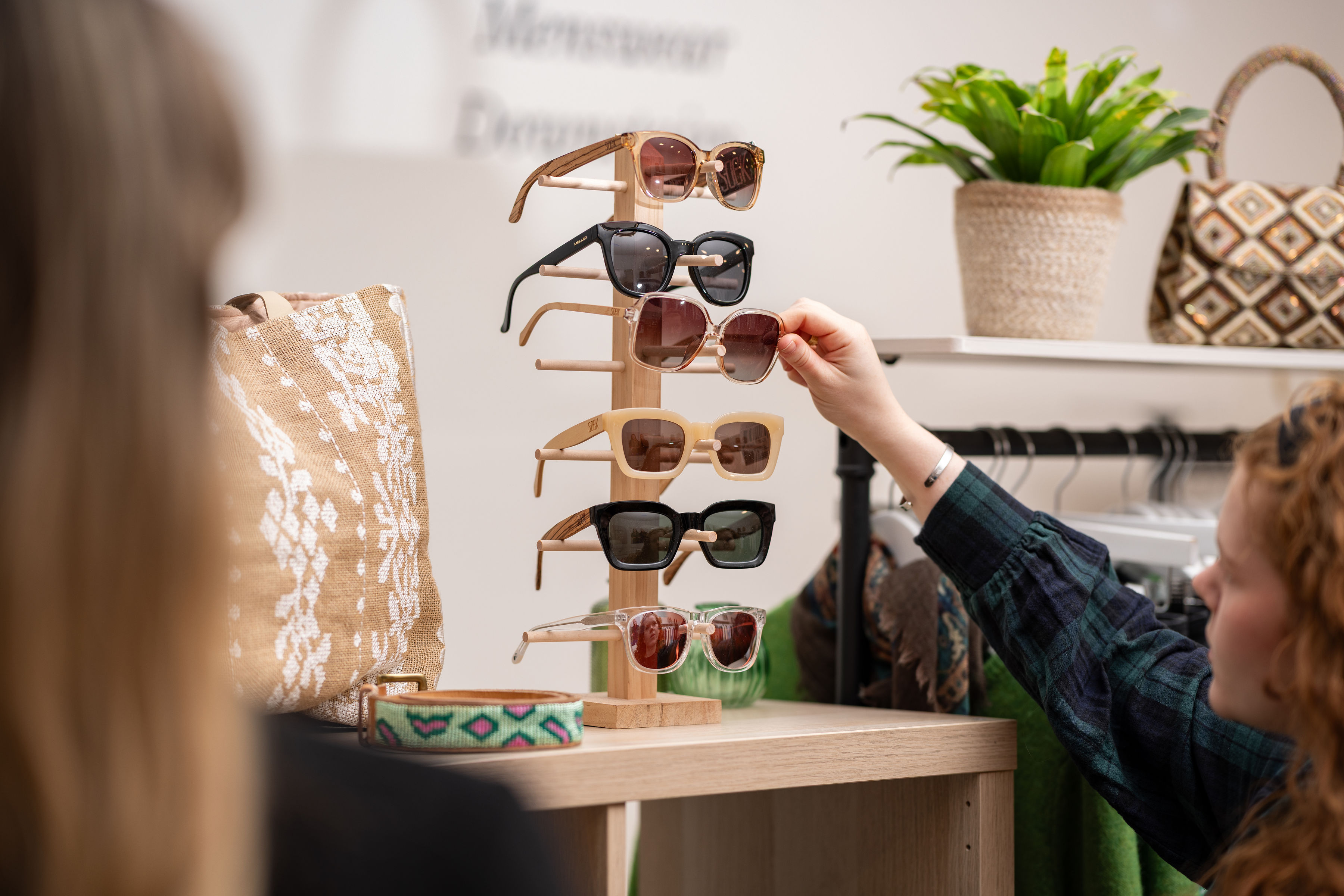
Tucked at the back of the store with only a few unflattering downward spotlights. I bounced a flash off the white ceiling — the whole ceiling acts as a giant soft source, which gives much nicer light than anything you'd otherwise get back there.
This is one I end up explaining to clients quite often. If you look at a plate of food shot under ceiling spotlights, you’ll see small, bright white reflections on the rim of the plate, on any sauce, on glassware, on cutlery, on anything even slightly shiny. These are specular highlights, and they’re caused by a small, intense light source hitting a reflective surface from directly above.
Most people don’t consciously notice them when they’re sitting in a restaurant eating their dinner. But in a photograph, they’re incredibly distracting. Your eye gets pulled to these little bright spots instead of focusing on the food itself.
It makes plates look clinical instead of appetising. And because the light’s coming straight down, you get harsh shadows underneath everything that flatten the dish out and kill the depth.
Compare that to a properly lit food image where the light comes from the side, through a large diffuser. Shadows are gentle, there are no harsh white reflections, and the food has depth. It looks how you’d want it to look if you were sitting by a window in a nice restaurant on a bright day. The whole point of bringing my own lights is to be able to give you that look every single time, whatever the venue’s ceiling is doing.
The “Natural Light Only” Question
When restaurants try to take their own photos on a phone, or when someone just getting into photography picks up a commercial job for the first time, the results are heavily affected by whatever’s already going on with the lighting in the room. Weird colour casts, awkward shadows, images that just don’t sit right. People looking at those photos might not be able to put their finger on what’s wrong, but they’ll feel something is off. That matters when the whole point of the image is to sell something.
Natural light is gorgeous when it’s good. But running a commercial photography business on the assumption that it’ll always be good enough is a risky bet, especially in a country where the weather has other plans most of the year.
Why This Matters for Your Business
If you run a restaurant, hotel, or interior design business and you’re thinking about getting some photography done, the lighting is the thing that separates professional images from photos that look like someone walked in with a nice camera. It matters more than the camera body or the lens, and more than anything that happens in editing afterwards.
So when I turn up and start setting up light stands and softboxes and ask you to switch off a few of the ceiling lights, I’m not being awkward. I’m making sure the photos look the same whether it’s bright outside or pouring with rain. That’s the whole job really. Take control of the light, get the same result every time.
If you’d like to see examples of this in practice, have a look at my food photography portfolio or my interiors work. And if you’ve got a shoot coming up and want to chat about what’s involved, feel free to get in touch or grab a quick estimate from the quote calculator. For more on what a typical commercial shoot looks like, have a read of my post on what to expect from a restaurant photo shoot.